 admin
admin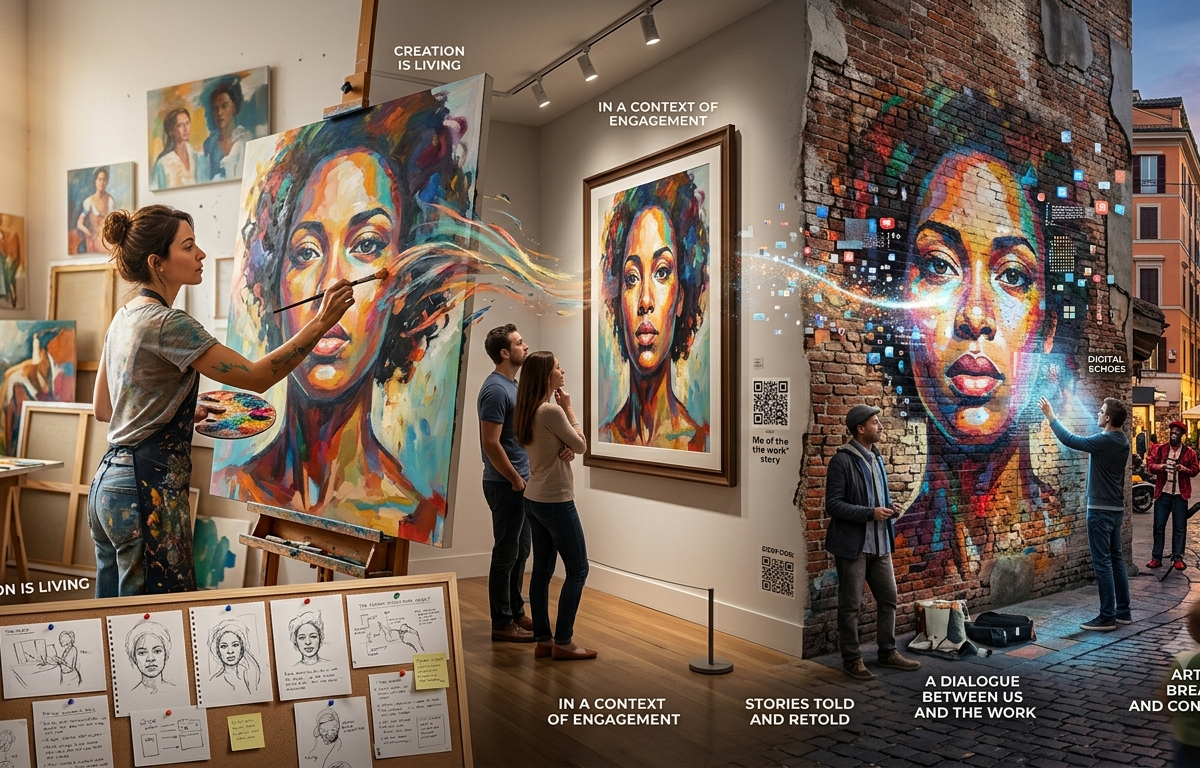
Living Canvases: Understanding the True Life of an Artwork
Have you ever looked at an old painting in a museum and wondered what stories it could tell if it had a voice? Most of us view art as something static. We see a finished canvas hanging under a gallery spotlight and assume its story ended the moment the creator put down their brush. But the truth is, a piece of creative work is never truly frozen in time.
The life of an artwork actually begins long before it hits a gallery wall, and it continues to grow, change, and evolve for as long as people are around to look at it. It is a living, breathing thing with its own unique biography.
From a Messy Studio to a Quiet Gallery
Every masterpiece starts its journey in a state of chaotic birth. In the artist’s studio, it absorbs the raw energy, frustration, and fleeting emotions of its creator. It smells like turpentine, fresh clay, or burning welding torches. This is where the initial emotional impact of art is forged.
But once the piece leaves the studio, it enters its next life phase: the public eye. When a painting moves into a museum or a collector’s living room, it detaches from the artist and forms new relationships with total strangers. A painting created during a historical war might have been meant to convey anger, but a hundred years later, a viewer might look at it and find a strange sense of peace or resilience. The meaning of the artwork changes depending on who is staring back at it.
The Battle Against Time: Art Conservation Secrets
There is also a literal, physical aspect to the lifespan of a masterpiece. Behind the scenes of every major gallery, teams of scientists and restorers work around the clock using fascinating art conservation secrets to keep pieces alive.
Wood warps, oil paints crack, and paper yellows. Every time a canvas breathes the oxygen in a room or gets exposed to a flash of light, its physical molecular structure alters slightly. In a way, art grows old just like humans do. Restorers don’t just fix cracks; they try to preserve the soul of the piece while respecting the natural aging process. The imperfections, the faded pigments, and the weathered textures all become chapters in the legacy of fine art.
Art Outlives Us All
Ultimately, the most beautiful thing about the lifetime of a creative piece is its immortality. Human beings come and go, empires rise and fall, but a well-preserved sculpture or a classic painting can easily survive for thousands of years.
When you create or appreciate art, you are participating in a massive timeline that stretches way beyond our own brief existence. Art is our way of leaving a footprint in the dust, proving to future generations that we were here, we felt deeply, and we had something beautiful to say. So, the next time you stand in front of a masterpiece, remember—you aren’t just looking at an object; you are meeting a traveler from another era.